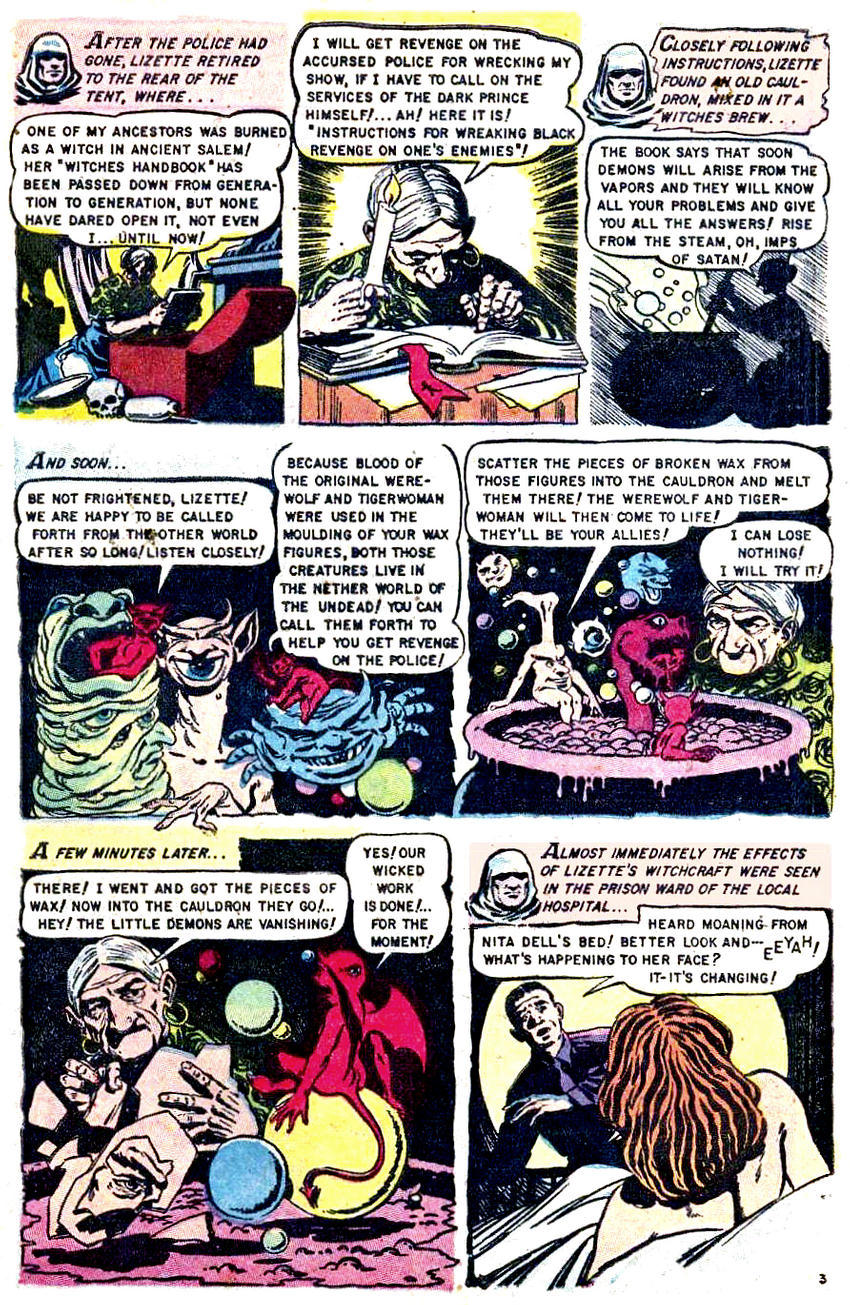
“One Awful Night With a Fiend,” from Ace’s
Hand of Fate #10 (1952), is about a director of snuff films. I remember reading an article in the 1970s about snuff films, which some thought at the time to be an urban legend. Perhaps someone in Hollywood read the same article or heard the same legends. It was the plot of at least a couple Hollywood movies (
8MM with Nicolas Cage, for one.)
My remembered '70s article was written in the days before video tape for consumer use became common, and before the Internet and digital media. With those technologies if people can think of it, they can do it. We have had sickening examples of real snuff films on the Internet — hooded, homicidal monsters beheading innocent people for political purposes.
So where was I? Oh yeah. This 63-year-old comic book story about snuff films, drawn by Mike Sekowsky and Vince Alascia.
**********
My interest in crime* comics grew out of the furor in the early '50s, just as I was becoming a regular reader of comic books. In a perverse way all of the shouting from the pulpits and the “experts” giving example after example of the dangerous effects of comics made me curious. I was drawn to Doc Wertham’s
Seduction Of the Innocent in a way he could not have imagined: I used it and its references to “bad” comics to put out want lists of what I was most curious about.
John Adcock, who does the excellent blog (much recommended),
Yesterday’s Papers, has posted a short history of Gershon Legman and his own war against comic books. Legman was known as a crank, in both his writing and personal life, but his conclusions about comic books are thought-provoking. It is just that we have to consider the source.
The article is
“Gershon Legman Vs the Crime Comic Books.
Crime comics were assumed to be aimed at children. That demographic has parents and teachers and other guardians of the interests of minors, and they became alarmed by all of the negative press about the effects of comic books on young minds. If you go back to some of my postings of crime comics you will see many examples of some of the worst, including some of the most alarming panels, sure to have attracted the attention of anyone leafing through their childrens’ comic book collection during that era.
I have said this before: nowadays, with all that is available in movies, on television, and lord help us, the nightly news programs, these comic books, now over 60 years old, seem almost quaint. My showing them is part and parcel of that fascination I formed back in the fifties from all of the strident voices raised against what I saw as a fun and relatively harmless hobby — collecting comics.
It is also fair to say that comics weren’t all that were singled out by critics. But the rest of the sex, crime and sleaze publishing of the time were ostensibly read by adults. A cover like this, of a prose magazine aimed at adults, devoted to true crime stories, doesn’t seem all that far removed from a comic book cover.
The same formula used in the comics applies: the promises of illicit thrills, violence and sex await you if you plunk down your money for this publication.
*Horror comics, also, but for the sake of this essay I’ll stay on the subject of crime comics.