I was 10 years old in 1957, and aware of the buzz on the movie, Baby Doll, from a play by Tennessee Williams. I thought the images of actress Carroll Baker sucking her thumb were odd, but not only was I only 10, I was completely naïve about sex and sexual symbolism. Baby Doll was controversial because of its sexual theme. But all of it went over my head.
That summer I bought Humbug #1 at a local pharmacy. Later in the summer I bought Mad #35. Both of them took off on the image of Carroll Baker. Humbug did a more traditional satire, probably written by editor Harvey Kurtzman, and Mad did a 4-page mash-up of Williams’s plays, Baby Doll, A Streetcar Named Desire, and The Rose Tattoo, drawn by Wallace Wood. Despite my innocence, I “got” the Humbug satire, but was puzzled by Mad. That was because at the time I knew more about Tennessee Ernie Ford* than Tennessee Williams.
When looking at Humbug and its bad printing, it did not match Mad, but I recognized the names Harvey Kurtzman and Jack Davis from the Mad Reader paperback. (And Humbug cost 10¢ less than Mad; important for a kid with a small allowance.) I knew more about Mad than I did sex. Not impossible, because I knew nothing about sex except I liked looking at pictures of actresses like Carroll Baker, Marilyn Monroe, and especially the incredible Brigitte Bardot . . . sigh. Oops, I’m going off into a reverie. Sorry about that.
The Humbug scans come from my copy of Humbug #1, and the Mad scans come from the CD set, Totally Mad.
*From YouTube, Tennessee Ernie’s biggest hit, “16 Tons”.
Translate
Showing posts with label Harvey Kurtzman. Show all posts
Friday, October 18, 2019
Monday, August 05, 2019
Number 2371: Pappy gets into the Spirit
I have been spending time excavating in my basement, going through boxes and files. Some parts of my collection are spread out, and I have had some fun (when not choking from the dust) finding things I thought lost. Such was a copy of Help!, Vol. 2 No. 1, dated February 1962. I bought it off the stands when I was 14, and it was my introduction to Will Eisner’s Spirit.
The episode is the second part of the Sand Saref story, but is actually repurposed from another project by Eisner, a character called John Law, Detective, drawn in 1948, but never published until the early ’80s by Eclipse. Harvey Kurtzman was the editor of Help!, and if he picked the Spirit story to use, he found one of the best examples of Eisner’s storytelling.
After 58 years most memories grow dim, but I definitely remember the effect seeing this had on me. I didn’t know the term “film noir” then, but I recognized how cinematic it is. It appeared in the weekly Spirit Section, January 15, 1950.
Friday, May 17, 2019
Number 2339: Harvey Kurtzman and the atom bomb thief
“Atom Bomb Thief!” was written and drawn by Harvey Kurtzman for Weird Fantasy #14 (actual issue #2, 1950).*
At the time there was a lot of talk about atomic secrets being stolen, and the Russians building their own bomb (the Soviet Union detonated their first nuclear bomb on August 29, 1949, so it was in the news.) Besides the pay-off of the story being obvious, EC Comics used those snappy surprise endings so often the ending was not a real surprising surprise, but at least appropriate to the build up.
SPOILER ALERT: Kurtzman used a real life nuclear test as his ending, the Baker bomb test at Bikini Atoll in July, 1946. Camera footage from that test was used at the end of Stanley Kubrick’s dark 1964 fantasy, Dr Strangelove or How I Learned to Stop Worrying and Love the Bomb.END SPOILER
Kurtzman’s story was also a way for him to use some cinematic effects in his drawings, enhancing the storytelling. I especially like the the layouts of the first and last pages.
*Weird Fantasy had been “formerly A Moon...A Girl...Romance” in order to save on having to buy a new second class postal permit. In this case they got caught after five issues, so they had to start re-numbering with issue number 6. The result was issue numbers repeated later on, affecting issue numbers 13 through 17.
Wednesday, July 25, 2018
Number 2211: The Most Dangerous Island of Death Game
I imagine a conversation between Harvey Kurtzman and Bill Gaines or Al Feldstein...or Bill and Al together: “Harvey, we need you to write and draw a horror story for the new book, Vault of Horror.” This would be in 1950, and so far EC Comics had dabbled a bit in horror, some horror stories in their crime comics titles (soon canceled), and finally in titles of their own. Kurtzman might have pulled a book off the shelf, an anthology with “The Most Dangerous Game,” written by Richard Connel. (I am still imagining.) Since its original publication in 1924 it has become a very famous short story, its plot swiped more times than I can count, from desperate writers who need to get a project done. It has also been made into movies more than once (the first time in 1932).
Harvey did a few stories for Feldstein’s books before being given editorial responsibilities. “Island of Death,” from The Vault of Horror #13 (actual #2, 1950) is not a horror story; not even a suspense story like “The Most Dangerous Game,” so it fails under both categories. But Harvey Kurtzman went on to create Mad and his war books for EC, The Jungle Book for Ballantine Books in 1959, “Little Annie Fanny” for Playboy...the list goes on. This story does not cry out with originality, but it is by Kurtzman, and therefore interesting to me.*
The scans come from the 1990 Gladstone reprint, The Vault of Horror #3.
*The New Yorker did a tribute to Harvey Kurtzman in their March 29, 1993, issue. It takes up four pages: a full-page illustration by Will Elder, a tribute with a brief history of Kurtzman’s work by Adam Gopnick, then a two-page tribute by Art Spiegleman. This is Elder’s page:
Harvey did a few stories for Feldstein’s books before being given editorial responsibilities. “Island of Death,” from The Vault of Horror #13 (actual #2, 1950) is not a horror story; not even a suspense story like “The Most Dangerous Game,” so it fails under both categories. But Harvey Kurtzman went on to create Mad and his war books for EC, The Jungle Book for Ballantine Books in 1959, “Little Annie Fanny” for Playboy...the list goes on. This story does not cry out with originality, but it is by Kurtzman, and therefore interesting to me.*
The scans come from the 1990 Gladstone reprint, The Vault of Horror #3.
*The New Yorker did a tribute to Harvey Kurtzman in their March 29, 1993, issue. It takes up four pages: a full-page illustration by Will Elder, a tribute with a brief history of Kurtzman’s work by Adam Gopnick, then a two-page tribute by Art Spiegleman. This is Elder’s page:
Monday, March 26, 2018
Number 2159: Harvey K. lashes that lightning!
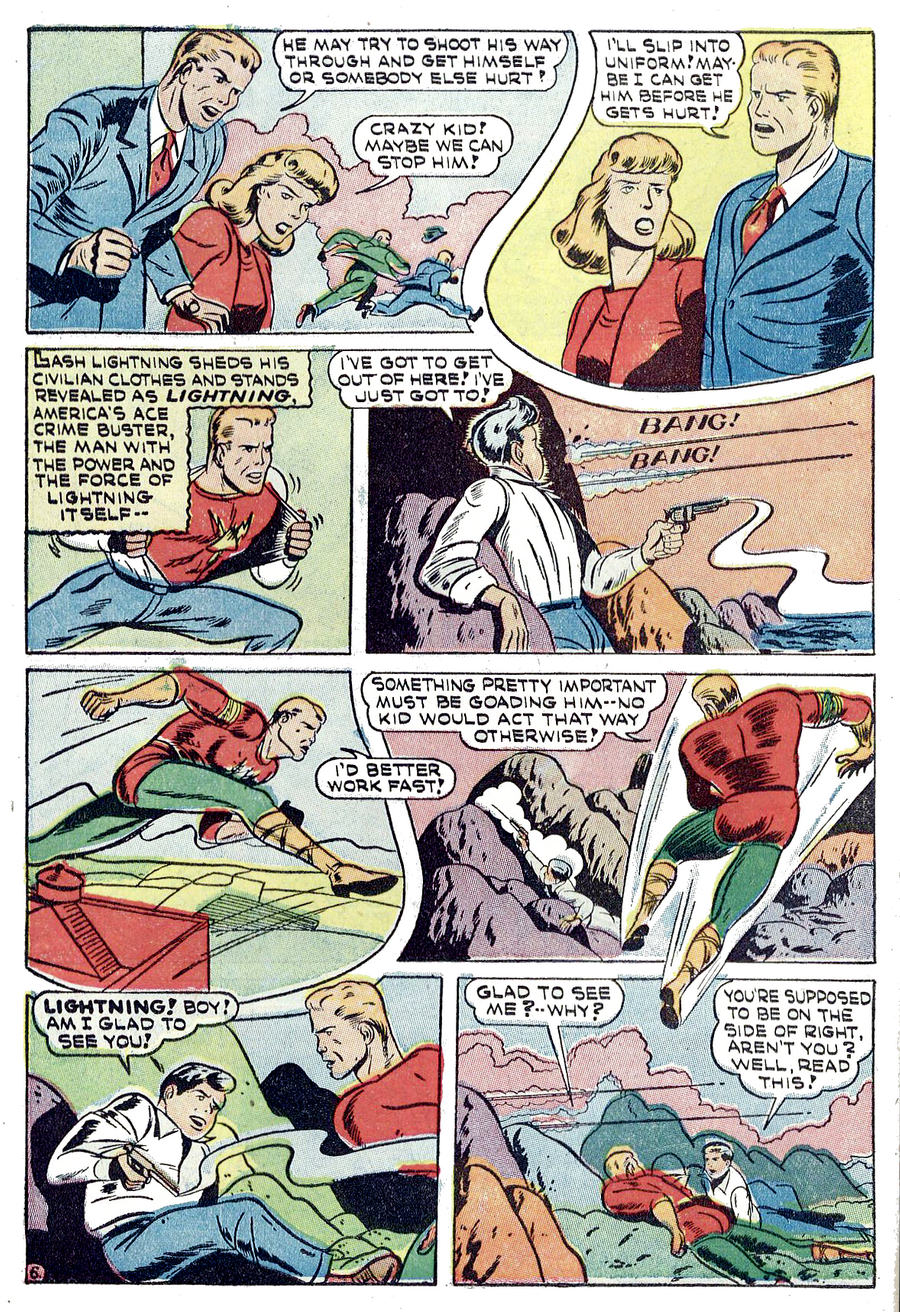
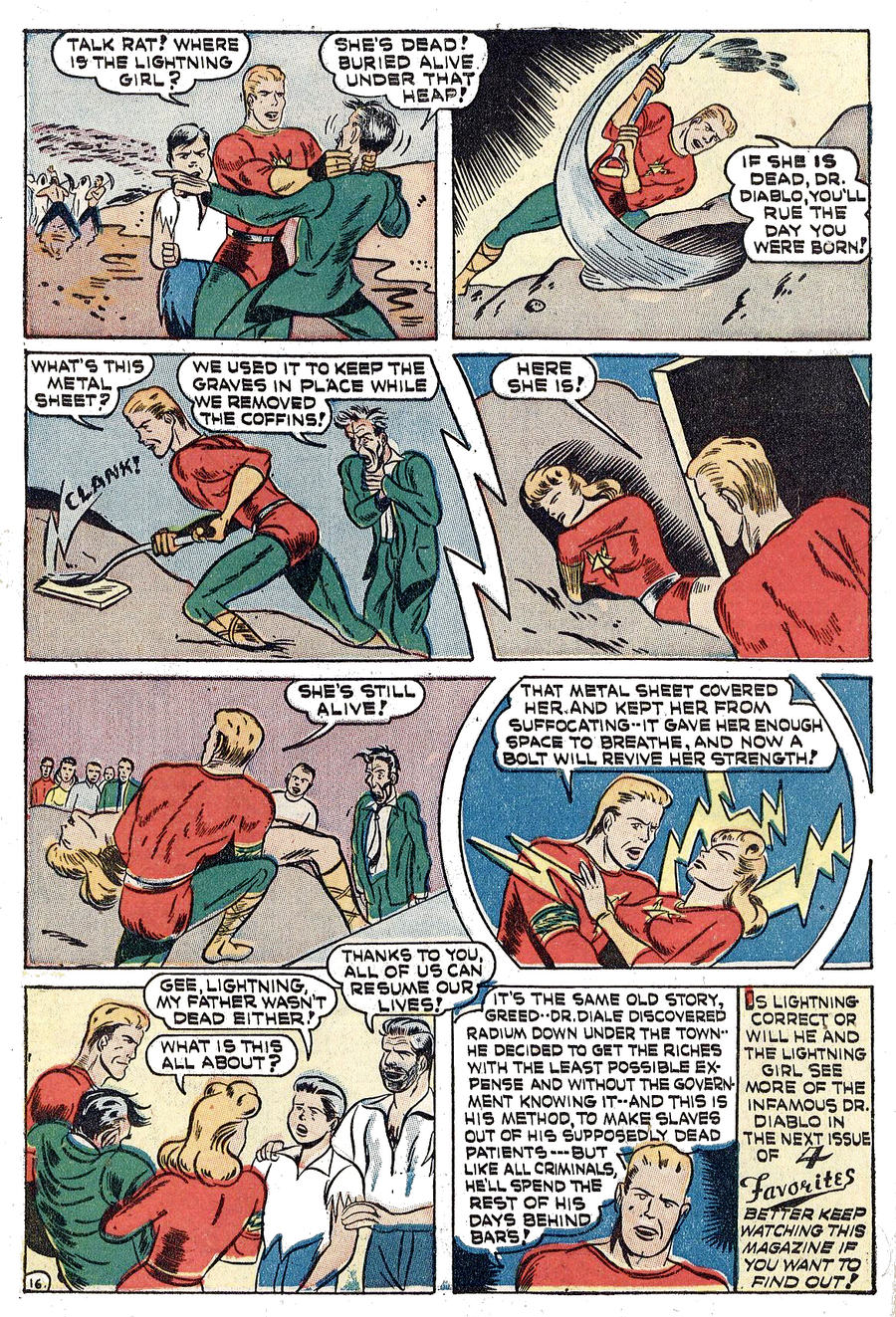
A couple of days ago I was comparing wannabe satirical comic books to Mad, and noted what the imitators lacked was Mad creator Harvey Kurtzman. Today I have a very early example of Kurtzman’s comic book work. I mean wayyyy early; Kurtzman was born in 1924, and this episode of “Lash Lightning” was published in 1942, which made Harvey about 18.
Kurtzman worked for Louis Ferstadt, a WPA artist* who took up drawing comic books in their early days. I have shown some early Kurtzman before, but when I checked it against the Grand Comics Database I saw they had “Harvey Kurtzman ?” for pencil and inking credits. They just aren’t sure. Can I be 100% sure? No, but I am leaning strongly toward Kurtzman being the artist. One, his initials are on the tombstone on the right hand side of the splash panel. It is hard to read, but it is an H.K. The other thing I noticed immediately is a youthful appropriation of Jack Kirby’s style for exaggerated action. Kirby was a master of action poses, and I visualize a young Harvey at a drawing board with copies of open Jack Kirby comic books.
This would have been a great school for Kurtzman, working against deadlines, drawing superheroes in action. He was drafted, served, came home, re-entered the comic book business, and by then had developed his own style.
*WPA — Works Progress Administration
Kurtzman worked for Louis Ferstadt, a WPA artist* who took up drawing comic books in their early days. I have shown some early Kurtzman before, but when I checked it against the Grand Comics Database I saw they had “Harvey Kurtzman ?” for pencil and inking credits. They just aren’t sure. Can I be 100% sure? No, but I am leaning strongly toward Kurtzman being the artist. One, his initials are on the tombstone on the right hand side of the splash panel. It is hard to read, but it is an H.K. The other thing I noticed immediately is a youthful appropriation of Jack Kirby’s style for exaggerated action. Kirby was a master of action poses, and I visualize a young Harvey at a drawing board with copies of open Jack Kirby comic books.
This would have been a great school for Kurtzman, working against deadlines, drawing superheroes in action. He was drafted, served, came home, re-entered the comic book business, and by then had developed his own style.
*WPA — Works Progress Administration
Subscribe to:
Posts (Atom)