This is the beginning of a theme week: Men in Space. It's for those intrepid men who brave the terrors of space, be they aliens or space pirates. First up, some space pirates, courtesy of the British space hero, Swift Morgan.
Swift was featured in a series which ran in the early fifties in a British comic paper. It was created and drawn by artist Denis McLoughlin, assisted by his brother, Colin, who scripted.
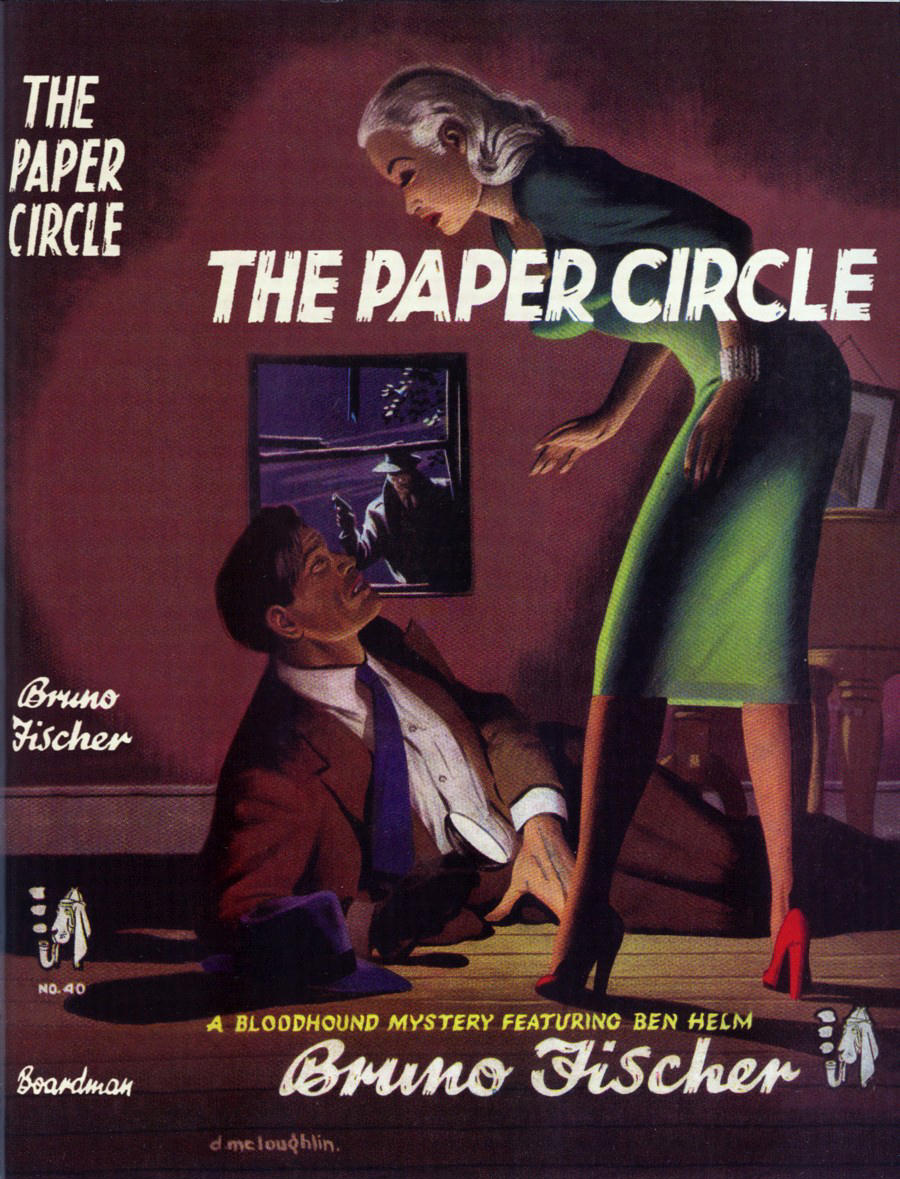
McLoughlin was an artist who drew in a style influenced by Americans. He was a prolific cover artist for UK editions of American and British crime and mystery novels. He also did pulp magazines (covers and interior illos) and comic books. His career,which ended by suicide in 2002, was capped by twenty years of drawing the UK Commando series. I bought the book, The Art of Denis McLoughlin by David Ashford. I am impressed by the quality of this artist's output in a combination autobiography, biography and illustrated catalog of his work.
I found the story online, reproduced from a black line comic interior. The color (sorry, I mean “colour”) cover is scanned from the The Art of Denis McLoughlin. (More below the story.)
The book I am refering to is a 950 copy limited edition, which I found available from a third party seller on Amazon.com, at a very reasonable price.
The prolific McLoughlin was also well known for his Western illustrations. He was fascinated by the subject, and had a large reference library at his home .
Here are a couple of his cover illustrations from the book, which show his versatility in style and subject matter. I especially like his moody, noir-styled illustrations in deep shadows. He drew some beautiful women, too...a must for pulps and paperbacks.
Translate
Monday, October 19, 2015
Friday, October 16, 2015
Number 1801: Holiday of heroin horror!
This crime comics story is a cautionary tales, preaching to the readers about the dangers of drug addiction. I was never tempted by hard drugs. My addiction is coffee...caffeine. Give me my caffeine or I’ll start bustin’ heads!
Times have changed. Marijuana is legalized in some states, with probably more to come, but heroin is still not a drug anyone should mess with. The history of drug addiction goes back even further than this 1953 tale, when drugs like heroin, morphine, cocaine, were available on druggists’ shelves. They turned many people into addicts before the law stepped in and banned their sale. You can read about it here in this excerpt from the book, They Laughed When I Sat Down, by Frank Rowsome, Jr.: “A spoonful of opium helps the medicine go down”.
Now, man, pass me that pot...of coffee.
From Wanted Comics #51 (1953), drawn by Mort Leav:
Times have changed. Marijuana is legalized in some states, with probably more to come, but heroin is still not a drug anyone should mess with. The history of drug addiction goes back even further than this 1953 tale, when drugs like heroin, morphine, cocaine, were available on druggists’ shelves. They turned many people into addicts before the law stepped in and banned their sale. You can read about it here in this excerpt from the book, They Laughed When I Sat Down, by Frank Rowsome, Jr.: “A spoonful of opium helps the medicine go down”.
Now, man, pass me that pot...of coffee.
From Wanted Comics #51 (1953), drawn by Mort Leav:
Wednesday, October 14, 2015
Number 1800: John Carter and the Black Pirates of Omean
John Carter, having returned to Mars after disappearing back to Earth for a time, is plunged into the death struggles of the religious...those who take their last pilgrimage down the River Iss and fall into the clutches of the Therns and Black Pirates. It is an adaptation of The Gods of Mars, which was Edgar Rice Burroughs’ take on religion. There is an article examining ERB’s views of organized religion online, in ERBzine #1434.
In The Gods of Mars, ERB’s second John Carter of Mars novel, originally published in All-Story Magazine in 1913, ERB described the Black Pirates as “ebony-skinned,” which is reflected in this illustration for the 1918 book jacket by Frank Schoonover.
In 1952, when the novel was originally adapted for Dell Four Color series, the wise decision was made not to show them as black people. The pirate stuff is kind of ludicrous, though, because I see a skull and crossbones. On Mars, yet.
If you have not read my posting of the first in this Gold Key series, you can go to Pappy's #1732, then come back here.
The three issue series, as mentioned, first published in 1952 as Dell Four Color #375, 437, and 488, are reprinted out of sequence. Gold Key John Carter of Mars #3, which is what you are reading today, is actually #2, and vice versa. I am showing them in the order in which they should be seen, not in the order they were reprinted in 1965.
Drawn by Jesse Marsh.
In The Gods of Mars, ERB’s second John Carter of Mars novel, originally published in All-Story Magazine in 1913, ERB described the Black Pirates as “ebony-skinned,” which is reflected in this illustration for the 1918 book jacket by Frank Schoonover.
In 1952, when the novel was originally adapted for Dell Four Color series, the wise decision was made not to show them as black people. The pirate stuff is kind of ludicrous, though, because I see a skull and crossbones. On Mars, yet.
If you have not read my posting of the first in this Gold Key series, you can go to Pappy's #1732, then come back here.
The three issue series, as mentioned, first published in 1952 as Dell Four Color #375, 437, and 488, are reprinted out of sequence. Gold Key John Carter of Mars #3, which is what you are reading today, is actually #2, and vice versa. I am showing them in the order in which they should be seen, not in the order they were reprinted in 1965.
Drawn by Jesse Marsh.
Subscribe to:
Comments (Atom)